Table of Contents
What's included?
Different types
Good business in 2024?



Video CMS
A concept content management tool designed as part of a job application case study, built to make uploading, organizing, and publishing video content like series and movies fast and intuitive for content teams.
Timeline
2025
Type
Web Platform
Goal
Design a CMS that simplifies how content teams manage a growing video library, from upload to publishing, without the clutter and friction of typical back-office tools.
Understanding the process
Uploading and managing video content sounds simple until you're dealing with hundreds of episodes, multiple formats, and a team that needs to move fast without breaking anything. Every design decision started from that reality: how do you make a powerful, technical tool feel simple enough that content teams don't need a manual to use it.
Beyond upload and organization, I focused on the moments that actually slow teams down, metadata entry, status tracking, and finding the right piece of content among thousands. The goal wasn't just a functional CMS, it was one that respected how content teams actually work under deadline pressure.

problem statement
Managing content for film and TV platforms means coordinating a complex workflow between editors and publishers, most of them experienced professionals in their 20s, working fast without room for costly mistakes.
Editors
Responsible for uploading large volumes of content, adding metadata, categorizing, and updating it. Common friction points: incomplete or incorrect uploads, editing difficulties across varying formats, and delays in the approval process.
Publishers
Responsible for ensuring the accuracy and quality of content before it reaches the end user. Common friction points: identifying content with missing or incorrect information, building an effective feedback loop for revisions, and prioritizing what needs review first.
The Goal
Create a seamless workflow between editors and publishers, minimize errors, and make content management genuinely efficient, not just functional.
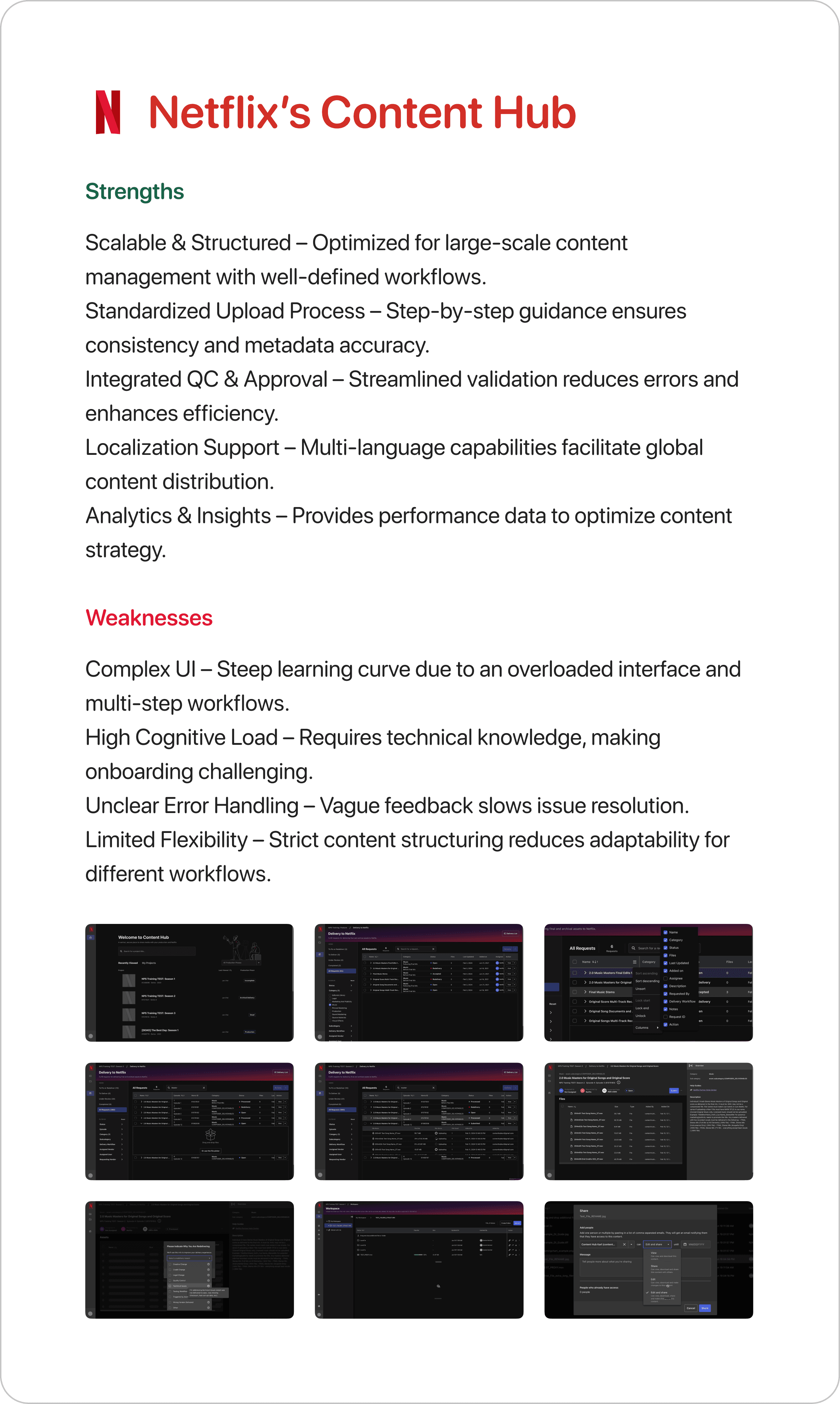
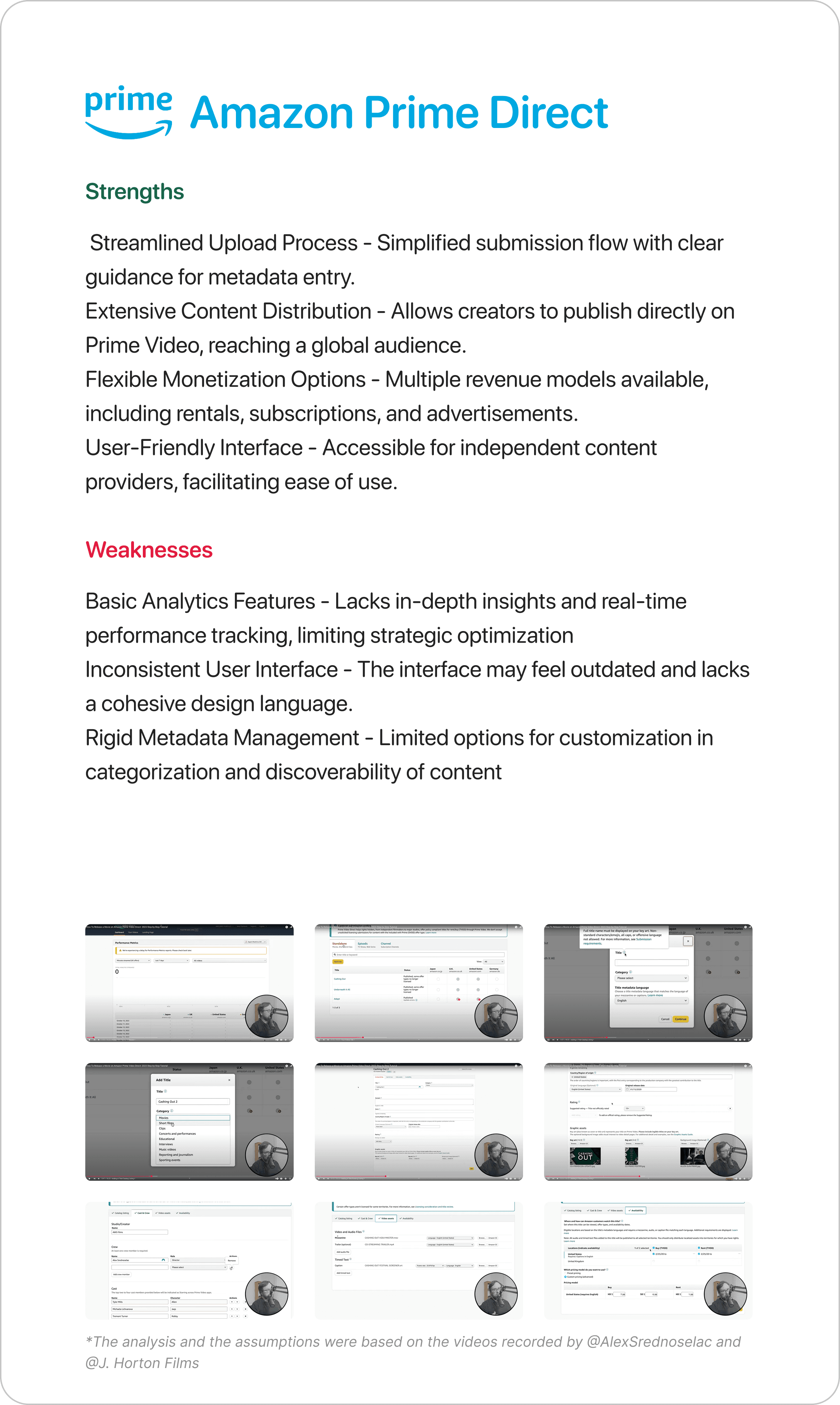
benchmarks



userflows


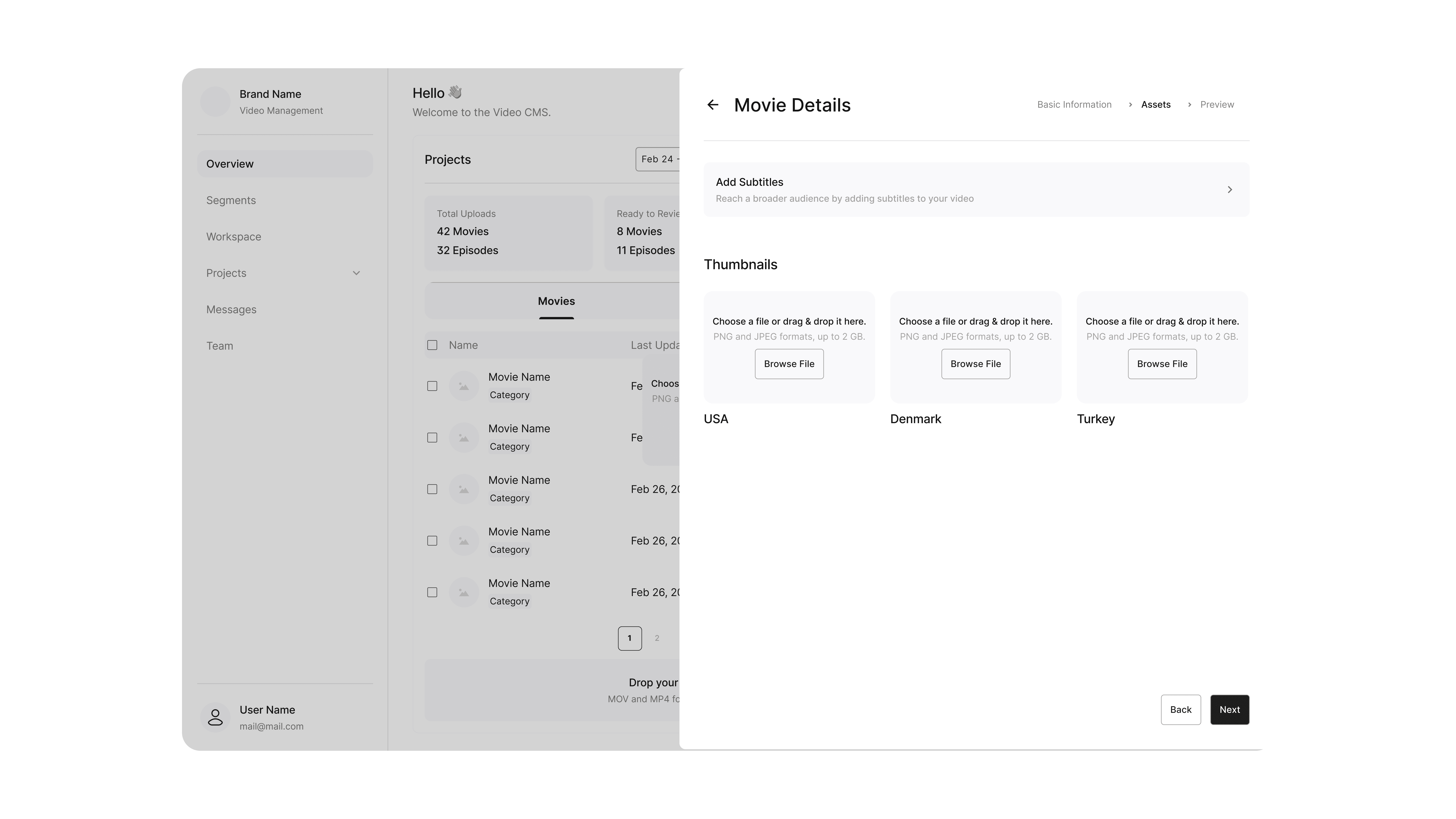
wıreframes



user Testıng
Testing focused on usability, efficiency, and clarity across the TV series upload flow, surfacing real pain points and bottlenecks with the people who'd actually use it every day.
Objective & Participants
The goal was to evaluate the uploading flow for both editors and publishers, identifying friction points before they became real problems. Testing involved 5-7 editors who regularly upload and manage TV series content, alongside 3-5 publishers who review, approve, or give feedback on submissions.
Scenarios for Editors
Editors were asked to upload a new TV series, create seasons, and add episodes, assign metadata like descriptions, thumbnails, and subtitles, and use segmentation to define different thumbnails for different audiences (by city or country). They then previewed the series, verified all required fields, and submitted it for review.
Scenarios for Publishers
Publishers accessed the dashboard to view all submitted series, reviewed metadata and previewed episodes, and either approved content or left comments for corrections, sending incomplete submissions back with clear feedback.
EVALUATING TEST RESULTS
Turning raw test observations into clear, actionable direction for the next design iteration.
Metrics for Evaluation
Time taken to complete the upload and approval process, number of errors during form submission, user satisfaction scores from a post-test survey, task completion rate, and issues reported by users.
Post-Test Actions
Analyzed results to identify recurring challenges, prioritized usability issues for the next design iteration, and ran follow-up interviews with select participants for deeper qualitative insight, implementing changes and planning a second round of testing where needed.